Winter driving preparation for truck drivers starts well before the wheels roll. After all, the road you start on in the morning may not be the road you’re driving by afternoon. A clear highway can turn to slush, ice or whiteout conditions a few hundred miles later, sometimes with little warning.
While you can’t control the weather, you can control how ready you are when it changes. A few simple steps can make a real difference when conditions turn.
This guide covers each of those steps, plus answers to common winter driving questions.
What should truck drivers pack for winter?
It helps to pack enough supplies to stay warm, fed and comfortable through a long, unexpected delay. Road closures, traffic backups and severe weather can leave you waiting much longer than planned, even on a familiar route.
When it comes to winter driving preparation for truck drivers, consider keeping these essentials in your truck:
- Extra clothing: Warm layers, gloves, a hat and extra socks in case clothes get wet or temperatures drop
- Food and water: Nonperishable food and drinking water to carry you through a delay
- Blankets: Extra blankets or warm bedding in case you’re stopped for a long stretch
- Towels: Handy for drying wet clothing, boots or surfaces
- Personal essentials: Medications, a flashlight, phone chargers and anything else you may need if the trip runs long
The goal isn’t to prepare for every possible scenario. It’s to have what you need if winter weather changes your plans.
.
How to make winter part of your pre-trip planning
Winter pre-trip planning covers two things: your equipment and your route. A thorough pre-trip inspection matters year-round, but cold weather can add new concerns.
Check equipment affected by cold
Along with your regular inspection, consider paying extra attention to these items:
- Tire tread depth and condition
- Light functionality
- Windshield wiper condition
- Mirror clarity
- Any other equipment that freezing temperatures may affect
Check the weather along your whole route before you go
Conditions at your starting point and destination may look nothing like the stretch in between. Before you leave, consider reviewing forecasts, weather maps and travel advisories for every area you expect to pass through.
Plan alternate stopping options
If weather gets worse or a highway closes, having backup stopping locations in mind can help you avoid a rushed decision. When possible, build extra time into your expectations. Winter trips don’t always run on schedule.
.
Signs winter road conditions are changing
Winter weather doesn’t always announce itself with heavy snow. Part of winter driving preparation for truck drivers is being aware: The first clues are often small, and spotting them early gives you more time to respond.
- Watch the tire spray – On wet roads, vehicles typically kick up spray. If that spray starts to fade while temperatures hover near freezing, it may mean moisture on the road is beginning to freeze.
- Check your mirrors – Ice building up on your mirrors or other exposed surfaces can be an early warning that freezing conditions are developing.
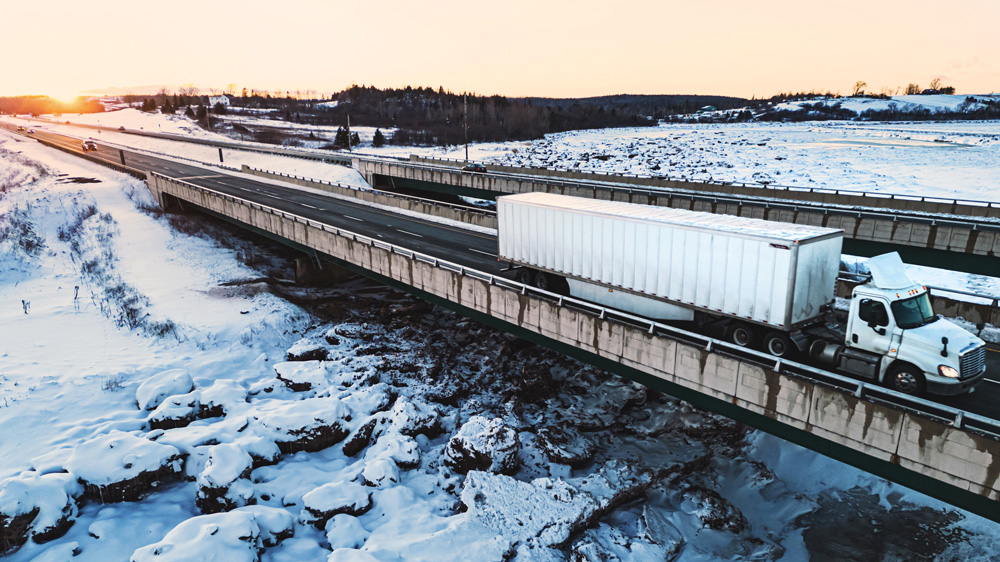
- Use extra caution on bridges and in shaded areas – Bridges, overpasses and shaded stretches may freeze sooner than the surrounding pavement. They can also stay icy longer after the sun comes out.
- Stay alert for black ice – Black ice is a thin, nearly clear layer of ice that can make pavement look merely wet. It’s especially hard to spot in low light, early mornings and evenings.
No single sign tells the whole story. Together, they can help you react before conditions get worse. When traction or visibility starts to change, consider adjusting your speed and following distance and asking yourself whether continuing is the safest choice.
“No single sign tells the whole story”
.
Plan for delays, shorter days and fatigue
Winter driving sometimes takes more time, patience and flexibility. Snow, ice, backups and low visibility may slow your progress. Planning extra stopping options and allowing for delays can take some pressure off an already challenging trip.
Shorter days may add another layer. More of your drive may happen in the dark during winter months. Changes in daylight and sleep schedules can also disrupt your body’s natural sleep-wake cycle.
A few habits can help as you think about winter driving preparation for truck drivers:
- Watch for signs of tiredness, like heavy eyelids, yawning or drifting from your lane
- Protect your rest time when you can
- Stop somewhere safe if you need more rest
.
Know when to stop driving in winter weather
If conditions are getting worse or you no longer feel comfortable continuing, it’s a good time to find a safe, appropriate place to stop. Experience helps you read the road, but even the most seasoned driver may not be able to control ice, visibility or what other drivers do.
.
Communicate early when weather changes your plans
When winter weather slows or stops your trip, early communication makes the situation easier for everyone. It helps to contact your dispatcher as soon as it’s practical once conditions start affecting your route or arrival time.
Reaching out early gives your team time to:
- Notify the customer
- Talk through available options
- Adjust delivery expectations
Customers understand that winter weather affects transportation schedules. Keeping everyone informed lets your team handle the details while you focus on making safe decisions.
“Early communication makes the situation easier for everyone”
.
Quick winter driving checklist
Before your next winter trip, run through these reminders:
- Pack extra clothing, food, water, blankets and personal essentials
- Inspect tires, lights, wipers, mirrors and cold-sensitive equipment
- Check weather and advisories along your route
- Identify alternate stopping locations
- Build extra time into your plans
- Watch for fading tire spray, icy mirrors and black ice
- Protect your rest and watch for fatigue
- Stop when conditions feel unsafe
- Contact your fleet manager early about delays
.
Preparation can make the difference
Winter driving preparation for truck drivers is important: Winter weather is unpredictable, and even careful planning can’t remove every challenge. Packing extra supplies, checking conditions before you leave, spotting early warning signs and knowing when to stop can help you take on winter trips with more confidence.
.
Explore driving opportunities with CRST
CRST offers driving opportunities for drivers at different stages of their careers, backed by a strong commitment to SAFETY and driver support.
Explore CRST driving careers to learn more about roles that fit your experience, goals and lifestyle.
.
Frequently asked questions about winter driving preparation for truck drivers
How can truck drivers prepare for winter driving?
Winter driving preparation for truck drivers includes packing extra supplies, inspecting cold-sensitive equipment, checking weather along the full route and planning alternate stops. It also helps to build extra time into your schedule and know when to stop.
What supplies should I keep in my truck during winter?
Consider carrying warm layers, gloves, a hat, extra socks, nonperishable food, drinking water, blankets, towels, a flashlight, phone chargers and any medications you need. These can help you stay comfortable during a long, unexpected delay.
What are the early signs of icy roads?
Watch for tire spray that fades while temperatures are near freezing, ice forming on your mirrors and slick spots on bridges, overpasses and shaded areas. These signs may mean moisture on the road is starting to freeze.
How can I spot black ice?
Black ice is thin and nearly clear, so it often looks like wet pavement. It’s most common on bridges, in shaded areas and during early mornings and evenings. When temperatures are near freezing and the road looks wet, it’s a good practice to drive as if ice may be present.
When should a truck driver stop driving in winter weather?
If conditions are getting worse or you no longer feel comfortable continuing, consider finding a safe, appropriate place to stop. A weather delay is far easier to manage than an incident caused by pushing through unsafe conditions.
How can truck drivers check winter road conditions before a trip?
Before heading out, it helps to review forecasts, weather maps and travel advisories for your full shift – not just your starting point and destination. Drivers may also want to look at conditions in mountain passes, bridges and other areas where ice can develop sooner. Checking ahead can help you plan alternate stopping options and build extra time into your trip.